
Woolly aerva, Polpala (Aerva lanata): Benefits, Dosage, Side Effects & Research
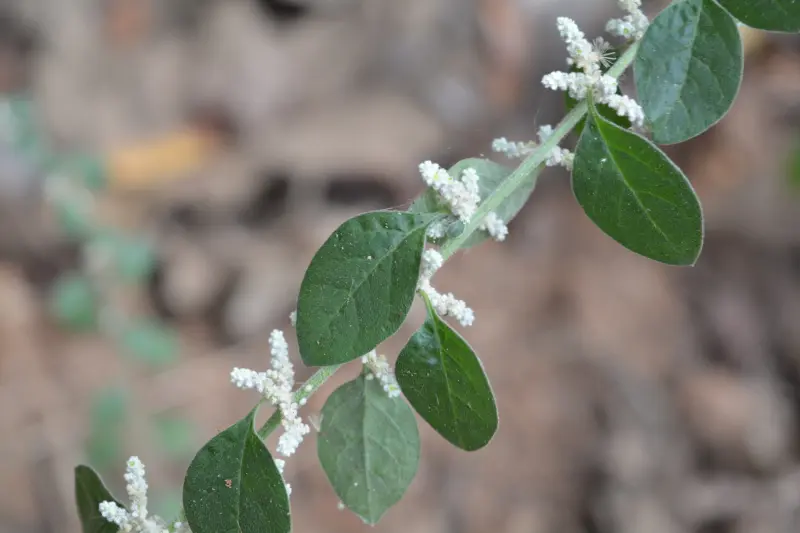
*Aerva lanata* is a small, erect or prostrate pubescent plant found in tropical regions, with pubescent leaves and small, white flowers. It is used in traditional medicine for its diuretic and anti-lithic properties.
Quick Facts & Key Highlights
Table of Contents
What is the Scientific Name of Woolly aerva, Polpala?
The botanical or scientific name of Aerva lanata is commonly known as Woolly aerva, Polpala. This plant botanically belongs to the Amaranthaceae family. Its other local or common vernacular names include Woolly aerva, Polpala, गोरखबूटी, गोरखगांजा, भद्रा, अश्मभेदा, पाषाणभेद (कुछ संदर्भों में).
Ayurvedic Profile (Classical Ayurvedic Properties)
Ayurvedic characteristics according to classical text Bhavaprakasha Nighantu, Raja Nighantu:
Key Active Phytochemicals & Bioactive Compounds
Phytochemicals Found in Plant Parts
Active Bioactive Compounds (via PubChem & IMPPAT)
Bioactive molecules providing therapeutic results for target ailments:
Kaempferol is a tetrahydroxyflavone in which the four hydroxy groups are located at positions 3, 5, 7 and 4'. Acting as an antioxidant by reducing oxidative stress, it is currently under consideration as a possible cancer treatment. It has a role as a geroprotector, an antibacterial agent, a plant metabolite, a human xenobiotic metabolite, a human urinary metabolite and a human blood serum metabolite. It is a member of flavonols, a tetrahydroxyflavone and a 7-hydroxyflavonol. It is a conjugate acid of a kaempferol oxoanion.
Quercetin is a pentahydroxyflavone having the five hydroxy groups placed at the 3-, 3'-, 4'-, 5- and 7-positions. It is one of the most abundant flavonoids in edible vegetables, fruit and wine. It has a role as a geroprotector, an antioxidant, an antibacterial agent, an antineoplastic agent, a protein kinase inhibitor, a chelator, a radical scavenger, an Aurora kinase inhibitor, a plant metabolite, a phytoestrogen and an EC 1.10.99.2 [ribosyldihydronicotinamide dehydrogenase (quinone)] inhibitor. It is a pentahydroxyflavone and a 7-hydroxyflavonol. It is a conjugate acid of a quercetin-7-olate.
Diseases Treated, Healing Action & Scientific Proofs
13 Verified ConditionsWhy Disease Occurs & Human Body Impact:
This health condition develops due to oxidative stress, immune dysregulation, and localized tissue inflammation. Physical weakness, loss of energy, and vulnerability to secondary health complications.
How Plant Acts & Heals This Disease:
It is an effective diuretic, helping to remove excess water and toxins from the body.
Key Active Compounds in Herb targeting this Ailment
FlavonoidsEstimated Time to See Results:
4 to 8 Weeks (1 to 2 months of consistent herbal intake)
Recommended Dosage & Adjuvant:
15-20ml juice of whole plant in the morning
Verified PubMed Research Papers:
Why Disease Occurs & Human Body Impact:
Kidney stones and UTIs occur when mineral crystals form in the renal tubules or urinary passages suffer from bacterial colonization. Physical weakness, loss of energy, and vulnerability to secondary health complications.
How Plant Acts & Heals This Disease:
Aerva lanata helps in dissolving and expelling kidney stones from the body.
Key Active Compounds in Herb targeting this Ailment
TriterpenoidsEstimated Time to See Results:
4 to 8 Weeks (1 to 2 months of consistent herbal intake)
Recommended Dosage & Adjuvant:
20-30ml decoction of leaves twice a day
Verified PubMed Research Papers:
Why Disease Occurs & Human Body Impact:
Kidney stones and UTIs occur when mineral crystals form in the renal tubules or urinary passages suffer from bacterial colonization. Physical weakness, loss of energy, and vulnerability to secondary health complications.
How Plant Acts & Heals This Disease:
Gorakhbooti (Aerva lanata) is highly effective in treating urinary tract infections (UTIs). Due to its diuretic properties, it flushes out bacteria from the body and soothes burning sensations.
Key Active Compounds in Herb targeting this Ailment
Flavonoids & AlkaloidsEstimated Time to See Results:
4 to 8 Weeks (1 to 2 months of consistent herbal intake)
Recommended Dosage & Adjuvant:
Decoction: 50-100ml daily
Verified PubMed Research Papers:
Deprecated: htmlspecialchars(): Passing null to parameter #1 ($string) of type string is deprecated in /home/u873801098/domains/herbtruth.com/public_html/plant.php on line 1501
Why Disease Occurs & Human Body Impact:
This health condition develops due to oxidative stress, immune dysregulation, and localized tissue inflammation. Physical weakness, loss of energy, and vulnerability to secondary health complications.
How Plant Acts & Heals This Disease:
It possesses potent antioxidant properties that protect the body from free radical damage.
Key Active Compounds in Herb targeting this Ailment
FlavonoidsEstimated Time to See Results:
4 to 8 Weeks (1 to 2 months of consistent herbal intake)
Recommended Dosage & Adjuvant:
100-200mg extract of whole plant
Verified PubMed Research Papers:
Why Disease Occurs & Human Body Impact:
This health condition develops due to oxidative stress, immune dysregulation, and localized tissue inflammation. Physical weakness, loss of energy, and vulnerability to secondary health complications.
How Plant Acts & Heals This Disease:
Its extracts possess anti-inflammatory properties that help reduce various types of inflammation.
Key Active Compounds in Herb targeting this Ailment
TriterpenoidsEstimated Time to See Results:
4 to 8 Weeks (1 to 2 months of consistent herbal intake)
Recommended Dosage & Adjuvant:
Leaf paste on external inflammation
Verified PubMed Research Papers:
Why Disease Occurs & Human Body Impact:
This health condition develops due to oxidative stress, immune dysregulation, and localized tissue inflammation. Physical weakness, loss of energy, and vulnerability to secondary health complications.
How Plant Acts & Heals This Disease:
It may be effective in inhibiting the growth of various bacteria and fungi.
Key Active Compounds in Herb targeting this Ailment
AlkaloidsEstimated Time to See Results:
4 to 8 Weeks (1 to 2 months of consistent herbal intake)
Recommended Dosage & Adjuvant:
Leaf decoction for gargling
Verified PubMed Research Papers:
Why Disease Occurs & Human Body Impact:
Type-2 diabetes develops when insulin secretion decreases or tissue cells become resistant to insulin, leading to elevated blood glucose and metabolic fatigue. Physical weakness, loss of energy, and vulnerability to secondary health complications.
How Plant Acts & Heals This Disease:
It may help in controlling blood sugar levels.
Key Active Compounds in Herb targeting this Ailment
FlavonoidsEstimated Time to See Results:
4 to 8 Weeks (1 to 2 months of consistent herbal intake)
Recommended Dosage & Adjuvant:
3-5 grams of leaf powder once a day
Verified PubMed Research Papers:
Why Disease Occurs & Human Body Impact:
Liver disorders and jaundice occur when toxins, viral infections, or lipid accumulation damage hepatocytes and impair bile metabolism. Physical weakness, loss of energy, and vulnerability to secondary health complications.
How Plant Acts & Heals This Disease:
It may help protect the liver from damage and improve its function.
Key Active Compounds in Herb targeting this Ailment
GlycosidesEstimated Time to See Results:
4 to 8 Weeks (1 to 2 months of consistent herbal intake)
Recommended Dosage & Adjuvant:
10-15ml juice of whole plant once a day
Verified PubMed Research Papers:
Why Disease Occurs & Human Body Impact:
Skin conditions and acne result from sebum overproduction, localized bacterial colonisation, tissue inflammation, and impaired epidermal barrier function. Physical weakness, loss of energy, and vulnerability to secondary health complications.
How Plant Acts & Heals This Disease:
Traditionally used for healing wounds and cuts.
Key Active Compounds in Herb targeting this Ailment
TriterpenoidsEstimated Time to See Results:
3 to 7 Days (Noticeable relief begins within 24 to 48 hours of regular usage)
Recommended Dosage & Adjuvant:
Leaf paste on the wound
Verified PubMed Research Papers:
Why Disease Occurs & Human Body Impact:
This health condition develops due to oxidative stress, immune dysregulation, and localized tissue inflammation. Physical weakness, loss of energy, and vulnerability to secondary health complications.
How Plant Acts & Heals This Disease:
Due to its diuretic properties, it may help in reducing blood pressure.
Key Active Compounds in Herb targeting this Ailment
FlavonoidsEstimated Time to See Results:
4 to 8 Weeks (1 to 2 months of consistent herbal intake)
Recommended Dosage & Adjuvant:
15-20ml decoction of root
Verified PubMed Research Papers:
Why Disease Occurs & Human Body Impact:
This health condition develops due to oxidative stress, immune dysregulation, and localized tissue inflammation. Physical weakness, loss of energy, and vulnerability to secondary health complications.
How Plant Acts & Heals This Disease:
It may help strengthen the immune system and enhance the body's disease resistance.
Key Active Compounds in Herb targeting this Ailment
GlycosidesEstimated Time to See Results:
4 to 8 Weeks (1 to 2 months of consistent herbal intake)
Recommended Dosage & Adjuvant:
100-200mg extract of whole plant
Verified PubMed Research Papers:
Why Disease Occurs & Human Body Impact:
This health condition develops due to oxidative stress, immune dysregulation, and localized tissue inflammation. Physical weakness, loss of energy, and vulnerability to secondary health complications.
How Plant Acts & Heals This Disease:
It may help in reducing cholesterol and triglyceride levels.
Key Active Compounds in Herb targeting this Ailment
Beta-sitosterolEstimated Time to See Results:
4 to 8 Weeks (1 to 2 months of consistent herbal intake)
Recommended Dosage & Adjuvant:
2-4 grams of whole plant powder
Verified PubMed Research Papers:
Why Disease Occurs & Human Body Impact:
This health condition develops due to oxidative stress, immune dysregulation, and localized tissue inflammation. Physical weakness, loss of energy, and vulnerability to secondary health complications.
How Plant Acts & Heals This Disease:
Some preliminary studies suggest it may have the potential to inhibit the growth of cancer cells.
Key Active Compounds in Herb targeting this Ailment
TriterpenoidsEstimated Time to See Results:
4 to 8 Weeks (1 to 2 months of consistent herbal intake)
Recommended Dosage & Adjuvant:
More research needed, not recommended for general consumption
Verified PubMed Research Papers:
Fact Check
Scientific Truth: Aerva lanata possesses properties that help dissolve and expel stones, but claiming it 'immediately breaks' them is an exaggeration. It depends on the type and size of the stone.
About the Author

Vikas Pal
Medicinal Plant Researcher & Health Content WriterVikas Pal is an independent Herbal Researcher and Health Content Writer with over one year of experience in researching medicinal plants and evidence-based herbal medicine. He specializes in reviewing scientific literature, analyzing traditional herbal knowledge, and presenting accurate, easy-to-understand information based on trusted sources, including peer-reviewed journals, PubMed, WHO, and other reputable health organizations. His goal is to make reliable herbal knowledge accessible while helping readers understand the potential benefits, safety, traditional uses, and current scientific evidence of medicinal plants.