
Male Infertility
Below is the list of all medicinal plants scientifically proven to assist in the treatment of Male Infertility. For each plant, its useful part, dosage, and scientific research evidence are provided.
Useful Herbs for Male Infertility
1 certified medicinal plants with scientific evidence scores (descending order):
Comparison Matrix of Certified Herbs
| Herb | Evidence Score | Part Used | Adjuvant & Dosage | Evidence Source | Health Benefit Mechanism |
|---|---|---|---|---|---|
|
Withania somnifera
|
85% | Root |
Dosage: 5 grams of root powder daily with milk
|
Clinical Trial Proven | Ashwagandha boosts testosterone levels in men, improving sperm quality and motility. |
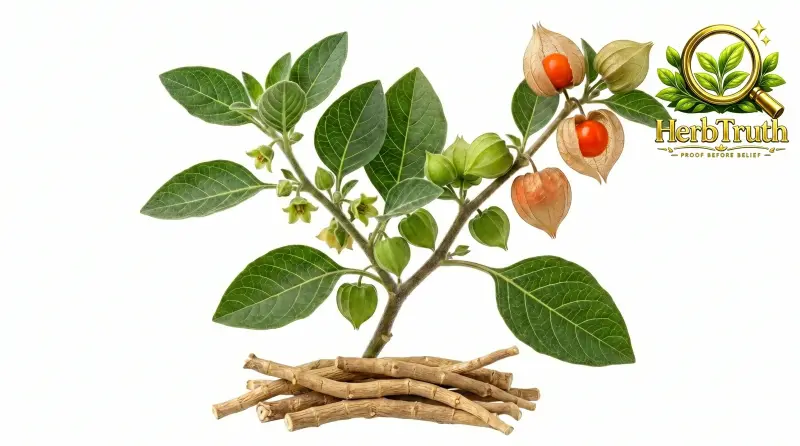
Indian Ginseng / अश्वगंधा
Withania somnifera • SolanaceaeAshwagandha boosts testosterone levels in men, improving sperm quality and motility.
Reduces oxidative stress in seminal plasma, increases serum levels of luteinizing hormone (LH) and follicle-stimulating hormone (FSH), and directly stimulates Leydig cell activity to enhance testosterone production and spermatogenesis.
Herb Comparison Matrix
Comparison of all verified herbs based on clinical evidence level and study publication counts:
| Herb Name | Scientific Name | Evidence Level | Total Studies | PubMed Counts |
|---|---|---|---|---|
| Indian Ginseng | Withania somnifera | Strong Clinical | 11 | 8 studies |
Verified Fact-Checks
Truth: This is a myth. Ashwagandha has many health benefits, but it cannot cure all diseases.
Related Questions & Answers
No related questions registered yet.